
CONTACT
  • Login
  • Register
Upgrade
NYCwebzine
Advertisement
  • Home
    • Our Authors
    • Media Kit
    • Contact
    • Cookie Policy
    • Terms and Conditions
  • News
  • Business
  • Lifestyle
    • Beauty
    • Sustainable living
    • Well-being
    • Sports
    • Creativity
  • Culture
  • Gastronomy
  • Travel
  • Global New York
  • Insights
  • Local Guide
    • Activities in New York
    • Hotels in New York
    • Nightlife in New York
    • Restaurants in New York
    • Services in New York
    • Shopping in New York
  • Home
    • Our Authors
    • Media Kit
    • Contact
    • Cookie Policy
    • Terms and Conditions
  • News
  • Business
  • Lifestyle
    • Beauty
    • Sustainable living
    • Well-being
    • Sports
    • Creativity
  • Culture
  • Gastronomy
  • Travel
  • Global New York
  • Insights
  • Local Guide
    • Activities in New York
    • Hotels in New York
    • Nightlife in New York
    • Restaurants in New York
    • Services in New York
    • Shopping in New York
No Result
View All Result
NYCwebzine
No Result
View All Result
Home Global New York

West Indian carnival: Brooklyn’s biggest party

From a Harlem ballroom in the 1920s to 3 million people on Eastern Parkway, this is New York City's most electric street celebration.

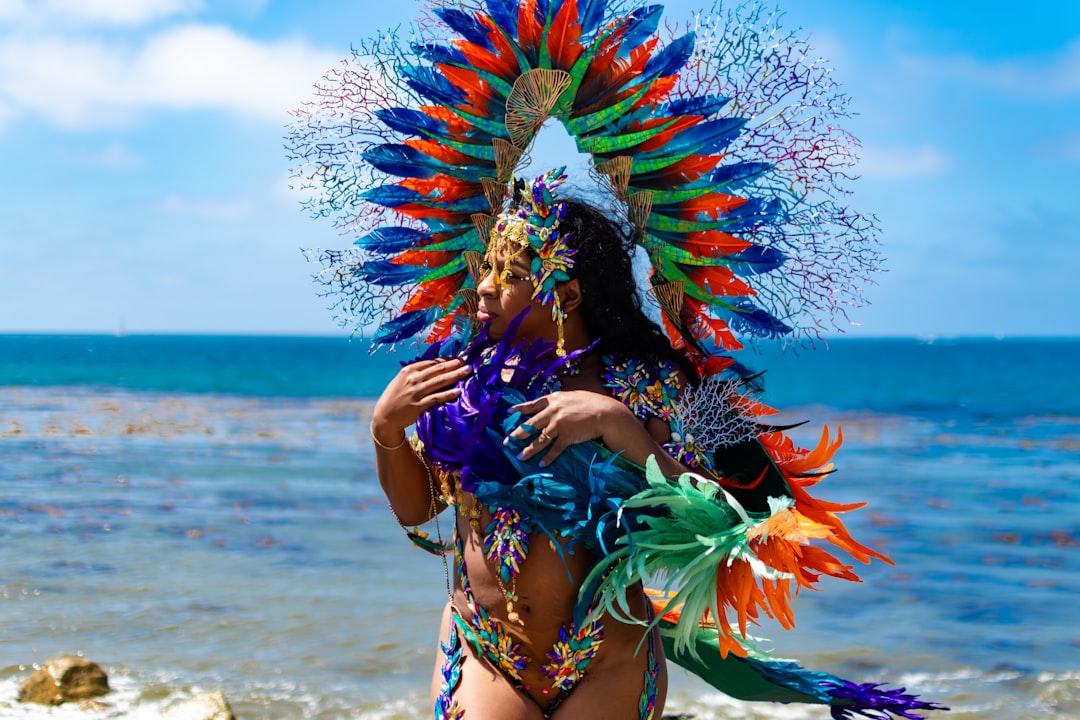
A woman in an elaborate feathered costume celebrates at the West Indian carnival parade on Eastern Parkway in Brooklyn.

West Indian carnival is what happens when Brooklyn decides to throw a party for the whole world, and the whole world shows up.

From Harlem ballrooms to Eastern Parkway

The celebration began in the 1920s, when Jessie Wardell and a group of West Indian friends started carnival traditions in Harlem, organizing costume parties in large indoor spaces because of the cold February weather. The outdoor spirit of Caribbean carnival could not stay inside forever. The first carnival street parade in New York City occurred on September 1, 1947, and grew larger each following year.

After violent incidents led the city to revoke the carnival permit in 1964, a committee organized by Trinidadian Carlos Lezama obtained a new permit for a parade on Eastern Parkway, Brooklyn. That decision changed everything. Carlos Lezama, an immigrant from Trinidad, is widely recognized as the “Father of the West Indian Day Parade” in Brooklyn. His work built something that outlasted him and grew beyond what anyone expected.

What the carnival actually looks like on the ground

The parade begins at Eastern Parkway and Utica Avenue and ends at Grand Army Plaza. Along that 2-mile stretch, everything competes for your attention at once. Steel pan and calypso bands in elaborate costumes march down Eastern Parkway, and vendors sell homestyle island food along the route in Crown Heights.

The festival unites many islands, including Trinidad and Tobago, Barbados, Haiti, Dominica, Saint Lucia, Jamaica, Saint Vincent and Grenada, Guyana, Suriname, and Belize, in one large celebration. Flags appear everywhere: on clothing, on hats, on faces. Costumes and face masks grow more elaborate each year. Participants invest both money and time in themes, costumes, and floats. Face masks come in a wide variety of styles inspired by natural and spiritual elements, mythical creatures, political events, and popular culture.

J’Ouvert: the celebration before the celebration

Before the main parade, a very different tradition takes the streets. The morning festival called J’Ouvert combines the French words “jour” and “ouvert” and refers to daybreak. J’Ouvert participants cover themselves with paint and powder, sometimes sharing it with others. The energy is raw and communal in a way the afternoon parade is not.

In the 1980s, the pre-dawn tradition of J’Ouvert joined the carnival lineup, bringing paint, powder, and percussion to Brooklyn’s early morning streets. The city moved the J’Ouvert start time to 6 a.m. after some violent incidents occurred in earlier years. Today, J’Ouvert and the main parade form a complete arc: the raw, street-level morning gives way to the spectacular, costumed afternoon.
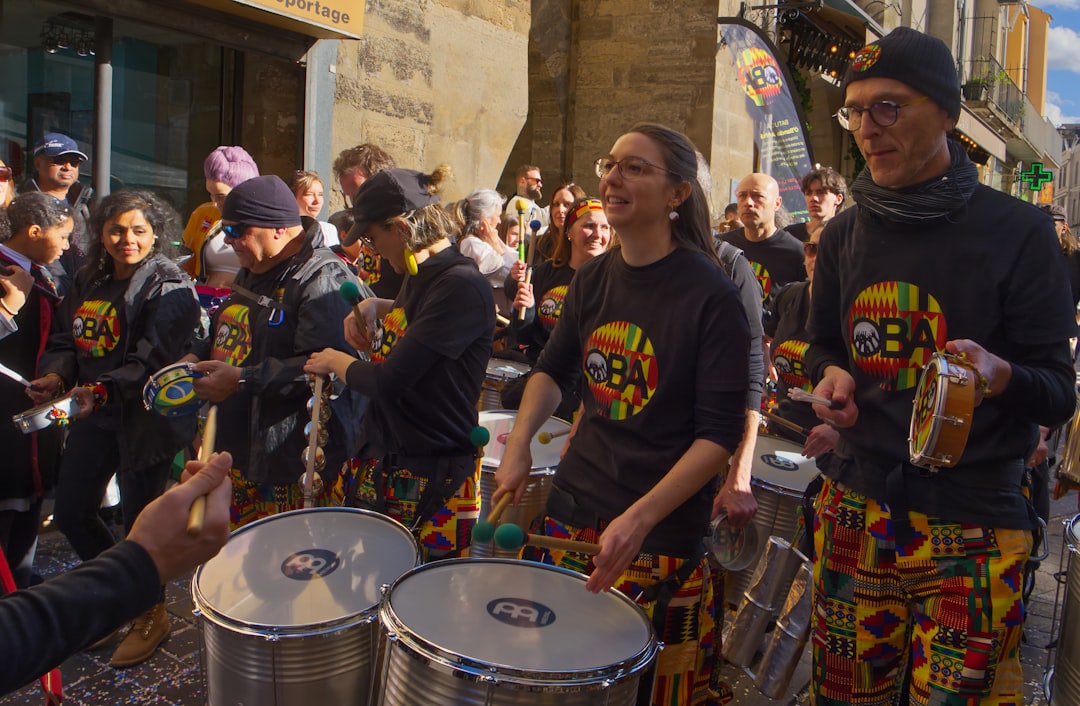
A steel pan musician performs for the crowd during the West Indian carnival celebration along Eastern Parkway, Crown Heights.

Expert perspective on West Indian carnival in New York

The West Indian carnival in Brooklyn is not simply a parade. It is the single most important weekend of the year for Caribbean New York, both culturally and economically. Restaurants make their year in those few days. DJs fill every available slot. The city flies Caribbean flags from City Hall to the corner bodega. For families who came from Trinidad, Jamaica, Barbados, or Guyana, this is the weekend when the city actually reflects them back. The carnival connects generations: grandparents who marched in the 1970s stand on the same sidewalk as grandchildren in their first costume. That continuity is what makes it more than a party. It is living cultural memory.

Cultural and community perspective, Caribbean diaspora organizations in Crown Heights and Flatbush, Brooklyn

The scale of what Brooklyn produces

The numbers attached to the West Indian carnival in Brooklyn are difficult to absorb. Under the guidance of the West Indian American Day Carnival Association, the parade has expanded into one of the biggest parades in New York City, attracting 4 million spectators and participants from around the world. The event is free, and it is the single most important weekend of the year for Caribbean New York, both culturally and economically.

The West Indian American Day Carnival Association hosts a number of pre-parade events, featuring outdoor music sessions from Afro-Caribbean bands, a junior carnival with live music, and the steel band Panorama contest. The Panorama steel pan competition takes place on the Brooklyn Museum lawn, where steel orchestras compete for the top title. The full week of events means that the carnival is not 1 day. It is 5 days of culture compressed into a few Brooklyn blocks.

-

An emerging designer adjusts a garment backstage before a New York Fashion Week runway show

Emerging designers at New York Fashion Week

12/09/2026
A woman in traditional dress waves the Indian flag during the India Day parade on Madison Avenue in New York City

India Day NYC: parade, flags and food

15/08/2026
A West African man serves a bowl of fufu and soup at a busy Bronx restaurant, representing the heart of the West African food

West African Bronx: food, culture, community

24/07/2026
A woman business owner serves a customer inside her immigrant-owned shop in New York City

Immigrant businesses shape NYC’s economy

01/07/2026
A woman in a detailed mermaid costume walks along the Coney Island boardwalk during the Mermaid Parade

Mermaid Parade: complete spectator guide

28/06/2026
Millions of spectators lining Fifth Avenue during the NYC Pride March celebrating LGBTQIA+ rights

NYC Pride Events: Best Guide for Global Visitors

01/06/2026

A vendor serves traditional Caribbean food to parade-goers at the West Indian carnival on Labor Day in Brooklyn, New York.

Why the West Indian carnival matters beyond Brooklyn

The parade is a cornerstone event for the Caribbean diaspora, reinforcing bonds of community while welcoming all cultures to join the festivities. New York did not simply host a Caribbean tradition. It helped transform and amplify one. Over the years, the parade has grown into one of the largest cultural celebrations in the United States, reflecting the spirit, resilience, and joy of the Caribbean community.

The West Indian carnival belongs to New York

Every August, the city shifts. Carnival Week events include Soca Fest, Junior Carnival, and the New York Panorama competition. By Labor Day morning, Crown Heights belongs to the Caribbean world. The West Indian carnival is proof that New York’s identity is not fixed. It is built fresh each year by the communities that make it their home. If you live here and you have never stood on Eastern Parkway on Labor Day, fix that. If you are visiting, plan your trip around it. The West Indian carnival does not come to you. You go to it, and it changes how you see this city.

Discover more about West Indian carnival

  • J’Ouvert and West Indian American Day Carnival (NYC.gov)
  • West Indian American Day Carnival Association (WIADCA) official site
  • NYC West Indian Day Parade 2026: Date, location and events (FOX 5 New York)

author avatar
Maya Johnson
Maya Johnson grew up in Crown Heights, Brooklyn, in a neighbourhood where every block told a different story. She studied journalism at Columbia and has spent her career writing about the city she knows better than anyone: its hidden corners, its contradictions, its food, and its people. From the best jerk chicken in Flatbush to rooftop bars in Long Island City that tourists never find, Maya writes New York from the inside out.
See Full Bio
Previous Post

Studio space NYC: find it affordable

Next Post

Free outdoor concerts NYC Labor Day

Related Posts

An emerging designer adjusts a garment backstage before a New York Fashion Week runway show
Global New York

Emerging designers at New York Fashion Week

12/09/2026
A woman in traditional dress waves the Indian flag during the India Day parade on Madison Avenue in New York City
Global New York

India Day NYC: parade, flags and food

15/08/2026
A West African man serves a bowl of fufu and soup at a busy Bronx restaurant, representing the heart of the West African food
Global New York

West African Bronx: food, culture, community

24/07/2026
A woman business owner serves a customer inside her immigrant-owned shop in New York City
Global New York

Immigrant businesses shape NYC’s economy

01/07/2026
A woman in a detailed mermaid costume walks along the Coney Island boardwalk during the Mermaid Parade
Global New York

Mermaid Parade: complete spectator guide

28/06/2026
Next Post
A diverse crowd of people enjoying free outdoor concerts in a New York City park on a summer evening

Free outdoor concerts NYC Labor Day

Leave a Reply Cancel reply

Your email address will not be published. Required fields are marked *

No Result
View All Result

Our Focus

NYCwebzine is your international window on New York City: lifestyle, business, culture, sports and events for a global audience drawn to the city that never stops reinventing itself.

Our Readers

NYCWebzine addresses readers who engage with New York at a high level: professionally, financially, strategically, and as decision-makers in their fields.

Our Approach

Lifestyle, travel, and culture are integrated as context and indicators of economic dynamism, purchasing power, and soft power — not standalone entertainment.

Recent Posts

  • NYC renter guide: sign smarter
  • Truffle dinners in NYC this autumn

© 2026 NYCwebzine by NOOR & NOOR — part of WEBZINE.world

Welcome Back!

Login to your account below

Forgotten Password? Sign Up

Create New Account!

Fill the forms bellow to register

All fields are required. Log In

Retrieve your password

Please enter your username or email address to reset your password.

Log In
Manage Consent
To provide the best experiences, we use technologies like cookies to store and/or access device information. Consenting to these technologies will allow us to process data such as browsing behavior or unique IDs on this site. Not consenting or withdrawing consent, may adversely affect certain features and functions.
Functional Always active
The technical storage or access is strictly necessary for the legitimate purpose of enabling the use of a specific service explicitly requested by the subscriber or user, or for the sole purpose of carrying out the transmission of a communication over an electronic communications network.
Preferences
The technical storage or access is necessary for the legitimate purpose of storing preferences that are not requested by the subscriber or user.
Statistics
The technical storage or access that is used exclusively for statistical purposes. The technical storage or access that is used exclusively for anonymous statistical purposes. Without a subpoena, voluntary compliance on the part of your Internet Service Provider, or additional records from a third party, information stored or retrieved for this purpose alone cannot usually be used to identify you.
Marketing
The technical storage or access is required to create user profiles to send advertising, or to track the user on a website or across several websites for similar marketing purposes.
  • Manage options
  • Manage services
  • Manage {vendor_count} vendors
  • Read more about these purposes
View preferences
  • {title}
  • {title}
  • {title}
No Result
View All Result
  • Home
    • Our Authors
    • Media Kit
    • Contact
    • Cookie Policy
    • Terms and Conditions
  • News
  • Business
  • Lifestyle
    • Beauty
    • Sustainable living
    • Well-being
    • Sports
    • Creativity
  • Culture
  • Gastronomy
  • Travel
  • Global New York
  • Insights
  • Local Guide
    • Activities in New York
    • Hotels in New York
    • Nightlife in New York
    • Restaurants in New York
    • Services in New York
    • Shopping in New York

© 2026 NYCwebzine by NOOR & NOOR — part of WEBZINE.world

Are you sure want to unlock this post?
Unlock left : 0
Are you sure want to cancel subscription?
Verified by MonsterInsights
ENES