


Immigrant businesses are not a footnote to New York City’s economy. They are the economy, block by block, borough by borough, built by people who arrived with a plan and made it real on a corner in Queens or a storefront in the Bronx.
The numbers behind the corner stores
Immigrant businesses make up 48% of New York City’s roughly 220,000 small businesses. Immigrants employ nearly half a million New Yorkers and contribute $195 billion to the city’s gross domestic product each year. Those are not abstract figures. They represent the restaurant where you eat on Friday, the pharmacy your neighbor trusts, and the grocery store that keeps your block alive at 10 p.m.

According to a 2024 report by the NYC Comptroller’s Office and data from the New York Immigration Coalition, immigrant business owners account for 33.8% of all self-employed residents in New York. Immigrant businesses generate $7.2 billion in net business income annually. That income circulates. It pays staff, it pays rent, and it funds other local businesses in a direct chain.
Immigrants are more than twice as likely as U.S.-born citizens to start a business, yet there are few resources specifically dedicated to assisting immigrant business owners. The gap between what these entrepreneurs produce and what the city gives back to them is a real tension this city has not fully resolved.
How immigrant businesses reshape each borough
Queens and Brooklyn continue to have the largest foreign-born populations, though new immigrant enclaves are emerging across all 5 boroughs. New York City’s immigrant population remains steady at 3.1 million, with new neighborhood hubs growing more diverse every year. Each of those hubs carries a commercial district with it.

Queens, Brooklyn, and the Bronx have seen strong economic expansion led by gains driven by large increases in their immigrant populations since the 1990s. The growth of immigrant-rich areas has produced an uptick in the number of businesses, sales, and jobs. In practical terms, that means more tax revenue, more local hiring, and more services for people who live far from Manhattan’s central business district.
Over 4 decades, foreign-born residents accounted for somewhat over half of the population gain in Manhattan and Staten Island, and virtually all of the growth across the other 3 boroughs. All of the city’s population growth over that full period was fueled by immigrants, particularly in Brooklyn, Queens, and the Bronx. Population is the foundation of any local economy. Without it, there are no customers, no workers, and no businesses.
The challenges immigrant entrepreneurs face
The obstacles faced by immigrant small businesses are compounded by harassment based on immigration status, very high costs of rent, and a lack of access to services and resources due to language barriers. These are not small inconveniences. They are structural barriers that keep productive businesses from reaching their full potential.
77% of surveyed immigrant business owners stated that they are overburdened by their current rent. Currently in NYC, no rent caps exist for commercial tenants. Across surveyed neighborhoods, 82% of respondents ranked cost of rent in their top 3 concerns. When a business closes because of rent, the community loses more than a storefront. It loses a gathering place, a local employer, and a tax contributor.
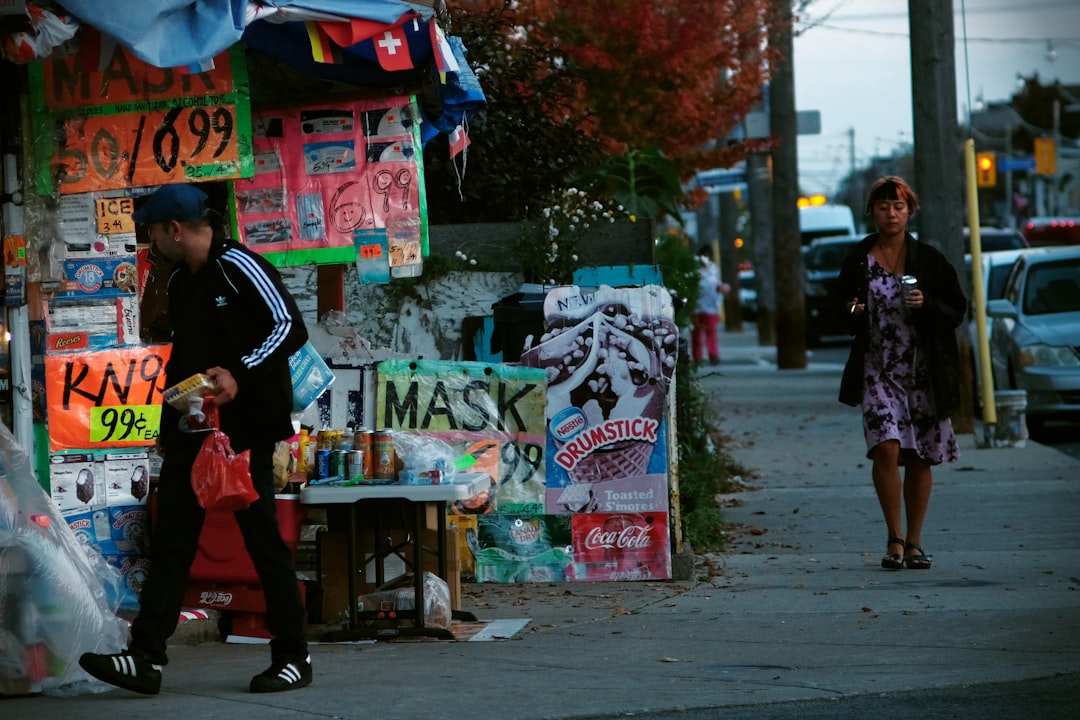
When immigrant neighborhood institutions vanish, jobs, community spaces, and affordable resources in low-income communities also disappear. Commercial displacement becomes cultural displacement. That is a pattern this city has seen in Sunset Park, in Jackson Heights, and in the South Bronx. The economic loss and the cultural loss arrive together.
Expert perspective on immigrant entrepreneurship
New York City has over 92,000 employer firm owners who were not born in the United States, accounting for 32.6% of all employer firms in the city. The initiative offers immigrant entrepreneurs free business courses, financing assistance, pro-bono legal services, and other services in multiple languages. Disparities in access and use of financing exist among different immigrant groups and can impact the success of immigrant-owned businesses. Asian immigrant business owners tend to have a broader variety of financing options and in many cases achieve higher survival rates than even white-owned businesses. At the same time, Hispanic immigrant business owners tend to access fewer reported sources of startup capital, a gap that requires targeted policy action to close.
Industry perspective, immigrant entrepreneurship and small business finance researchers
The workforce these businesses support
Immigrants make up more than one-third of New York City’s total population and 43% of its workforce. That share of the workforce does not sit passively inside large corporations. A substantial part of it works in, or is employed by, immigrant-owned small businesses across all 5 boroughs.
Within entertainment, medical, technology, and financial analysis industries, 54%, 50%, 47%, and 44% of employees respectively are foreign-born. These are not low-skill sectors. Immigrant workers and business owners operate at every level of New York’s economy, from the bodega to the biotech lab.
Nearly half of all New Yorkers speak a language other than English at home, and 2 out of 3 city residents are first- or second-generation New Yorkers. Immigrant businesses serve this population directly. They do it in the right language, with the right products, and with a cultural understanding that a chain store cannot replicate.






Why immigrant businesses define this city
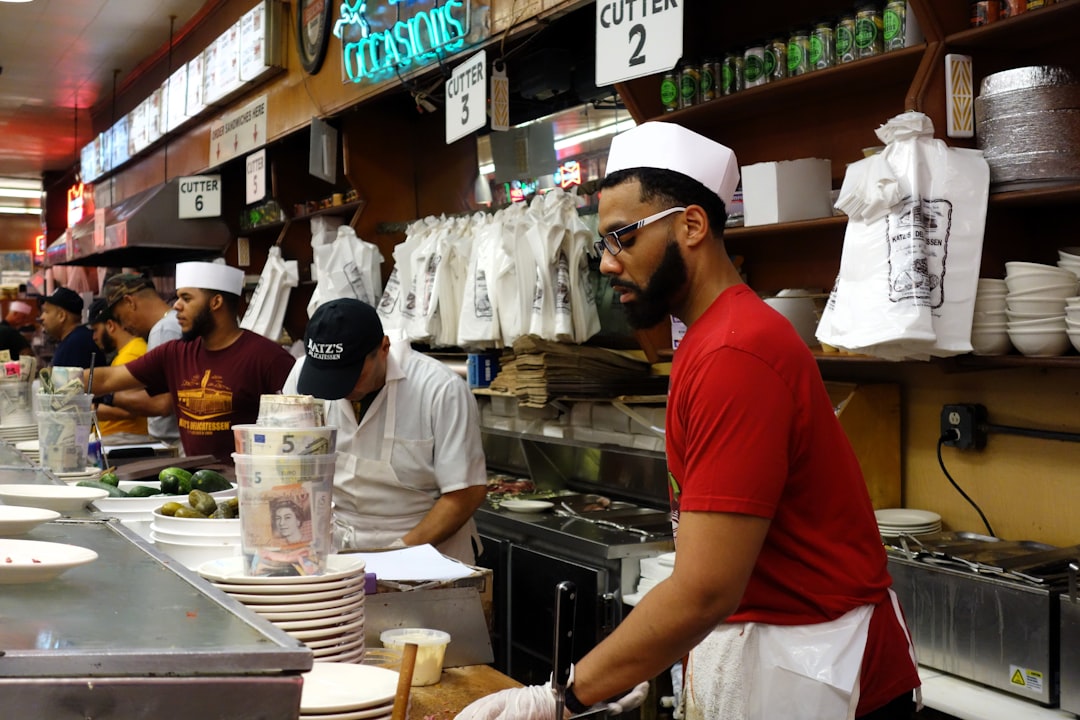
Immigrant businesses are not a separate chapter in New York City’s economic story. They are the story itself. For well over a century, foreign-born New Yorkers have left a deep imprint on the city’s culture and economy, from Italian restaurants to German delicatessens to the corner stores we call bodegas. That history is not decorative. It is structural.
The real work now is to match the contribution these businesses make with the support they deserve. Rent protections, multilingual city services, and better access to capital are not gifts. They are investments in the infrastructure that keeps New York competitive. Immigrant businesses have built this city from the ground up. The least the city can do is make it easier for them to stay. Explore the resources below to learn more about immigrant businesses and the policies that shape their future.

Discover more about immigrant businesses
- NYC Mayor’s Office of Immigrant Affairs: 2024 Annual Report on NYC’s Immigrant Population
- Bipartisan Policy Center: Immigrant Entrepreneurship, Economic Potential and Obstacles to Success
- NYC Mayor’s Office: “Newest New Yorkers” Report Highlights Immigrant Communities Across the Five Boroughs