
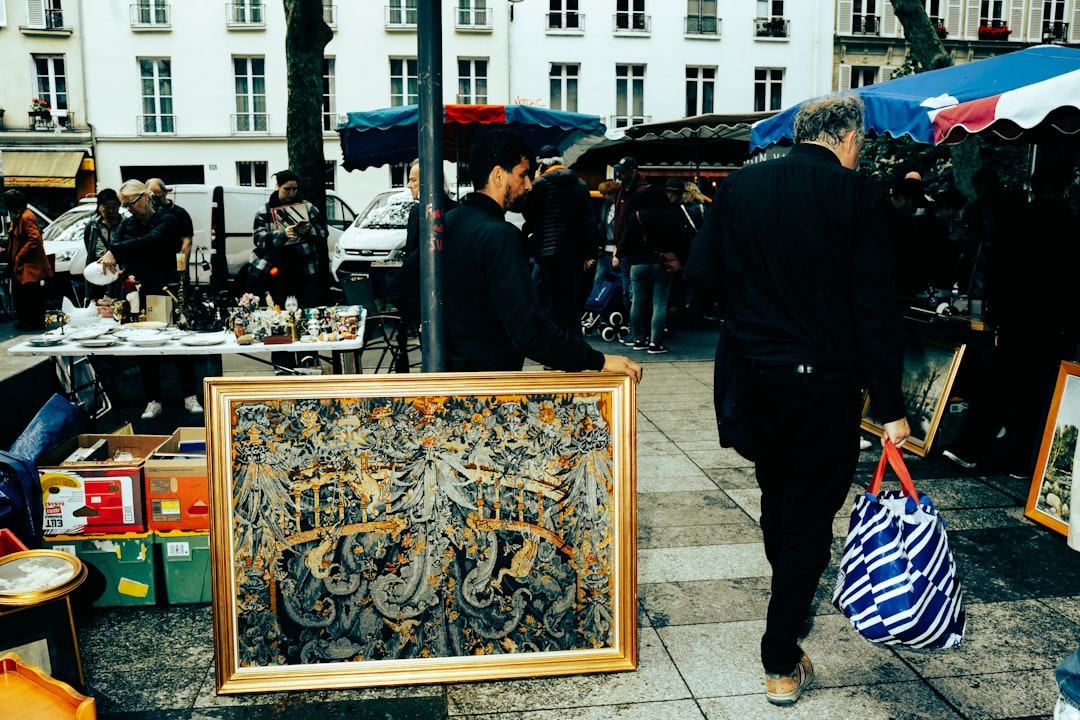
Street fair season in New York City turns ordinary sidewalks into open galleries, and if you make art, there has never been a better time to set up your own table and sell directly to the people walking past your work.
Get your paperwork right first
The permit process is simpler than most artists expect. As of August 30, 2024, you do not need a temporary vendor permit from the Department of Consumer and Worker Protection (DCWP) to be a street fair vendor. That change removed a real barrier for artists.

All vendors are required to obtain a Sales Tax ID, officially known as a Certificate of Authority. This certificate authorizes you to collect and remit sales tax in the State of New York, regardless of the size or duration of your operation, including temporary setups at street fairs.
You can apply for the Certificate of Authority through the New York State Department of Taxation and Finance website. You must apply at least 20 days before you make any taxable sale. There is no cost involved in the process. Start this step before you do anything else.
Choose the right street fair for your art
Not every street fair fits every artist. New York City runs events across all 5 boroughs, from the Upper West Side to Jamaica, Queens. The Queens International Night Market is a large, family-friendly open-air night market featuring over 100 independent vendors selling merchandise, art, and food, celebrating the rich cultural diversity and heritage of NYC and Queens.

Research the audience at each event before you apply. A fair in a residential Brooklyn neighborhood draws different buyers than one on a Midtown commercial strip. Look at the vendor list from past events. If similar work sells there, your art will have a real audience.
Contact the event organizer directly and ask about booth fees, available space, and foot traffic. Retail vendors at street fairs are no longer required to obtain a temporary street vendor permit from DCWP. However, retail vendors must still apply to the sponsoring organization and pay any applicable festival fees.
Build a booth that stops people
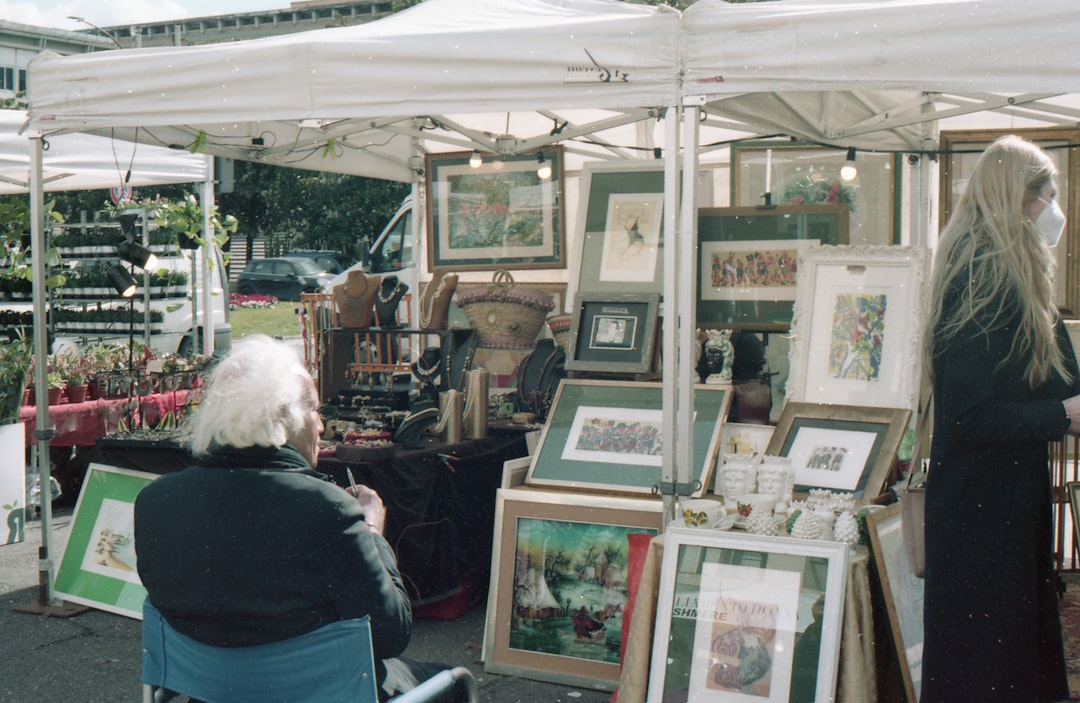
Your booth is your gallery. At a busy street fair, people make a decision in about 3 seconds. A clean, vertical display draws the eye better than flat work on a table. Use a grid wall or wire panels to hang prints and paintings at eye level.
Supplies to have on hand include: tape, a marker, a card reader, a folding chair, a table, a tent, display items, bags, plastic sleeves, packing material, business cards, signs, a calculator, a phone charger, and a water bottle. Buy a reliable card reader before your first event. Most buyers in New York City do not carry cash.
Bring a weighted tent if the fair is outdoors. Wind is a real problem on open streets, especially near the water in Brooklyn or along the Hudson. A tent that falls onto your work costs you more than the tent itself.
Expert perspective on selling at street fairs
Selling at a street fair is not just a transaction. It is a conversation between your work and the neighborhood. Artists who do well here understand that the fair is a community event first and a sales floor second. The buyers walking past are locals. They are curious, they are friendly, and they want to feel a connection to the person who made the thing they are considering buying. Your story matters as much as the price. Display a small card that explains your process or your inspiration. Let people ask questions. That interaction is often what closes a sale, not the artwork alone. Price your work at multiple levels so that someone on any budget can take something home.
Industry perspective, arts and street market professionals in New York City
Set your pricing with intention
Sell at different price points: small items like stickers will add up. Consider bundle discounts, for example buy 2 prints and get the 3rd at 50% off. This approach gives buyers a reason to spend more without feeling pressure.
Price your original work separately from your prints. Originals belong at the top of your range. Prints, cards, and small items create entry points for buyers who love your work but have a limited budget. A buyer who spends $15 on a card today may return for a $200 original at your next fair.




Accept every payment method you can. Square, Venmo, and Apple Pay are all standard at New York City street fairs. A buyer who cannot pay you is a sale you will never get back.
Promote before and after the fair
Post on Instagram and TikTok before the event. Announce your booth location, share a photo of your setup, and tag the fair organizer. Many organizers will repost your content and send it to thousands of followers. That is free advertising.
After the fair, post a recap. Show photos of your booth, your sold pieces, and the street around you. People who missed the event will follow you and show up at the next one. Your website alone is not a strong way to promote or sell your work, because traffic is very low compared to what you can do on social media. Social media is the hook that brings people to your website.

Collect email addresses at your booth. Use a simple paper sign-up sheet. Send a short note after each fair with your next event dates and any new work available online.
Start selling your art at a street fair this season
The street fair system in New York City is open to you right now. Get your Certificate of Authority, choose a street fair that fits your work, and build a booth that invites people in. Bring work at multiple price levels and talk to every person who stops. The artists who succeed at street fairs are not always the most talented. They are the most present. Start at 1 fair this season, learn what works, and build from there. This city has always rewarded people who show up and do the work.
Discover more about street fair
- NYC Street Vending: Official City Guide and Vendor Resources
- How to Become a Vendor at Street Fairs and Markets in NYC (Documented NY, 2025)
- Art Fairs: Tips for Selling (Art Prof)